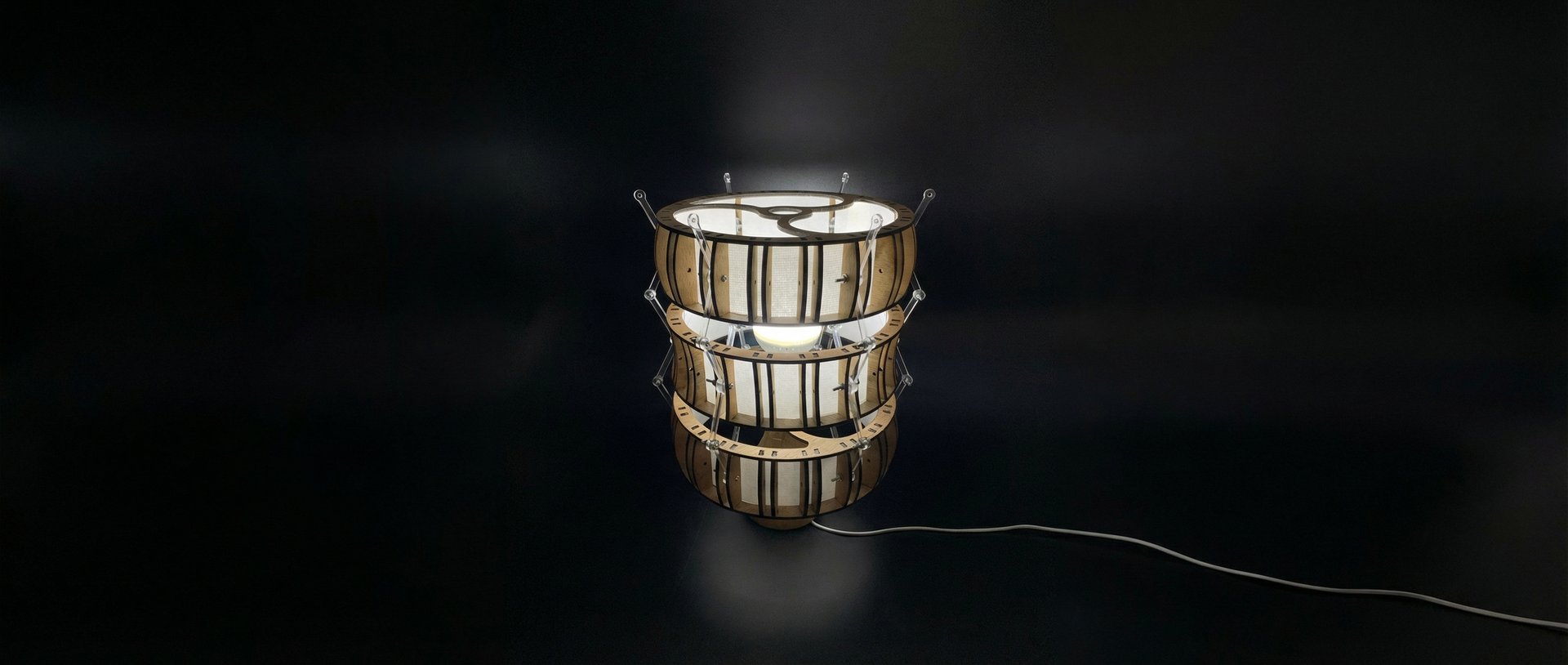
Brief: In a group of four, we were challenged to develop an adjustable table lamp grounded in a real-world context. The project required research-led design decisions, physical prototyping, and a final solution that clearly communicates both function and user value.
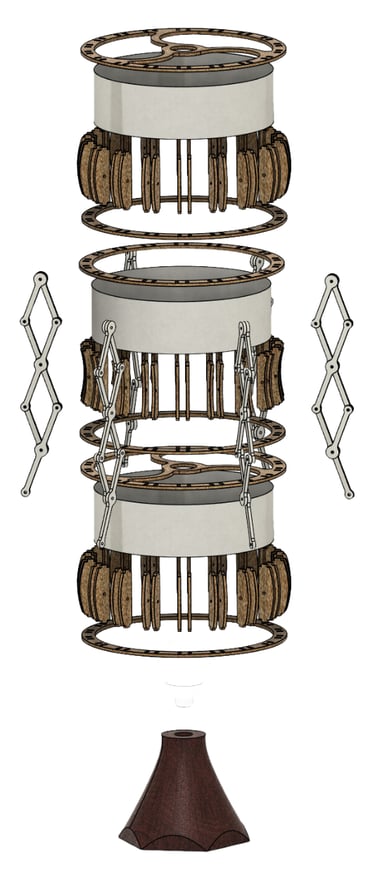
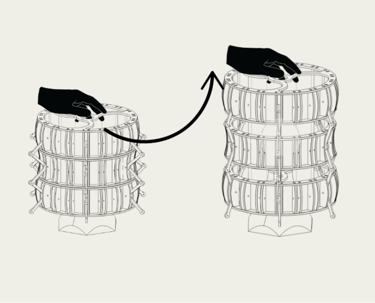
Locus: We designed Locus, a compact lantern-inspired lamp that adjusts brightness via mechanical controls rather than electronics. By lifting baffle rings via a pantograph mechanism, the lamp transitions from diffused, comfortable light to focused task illumination. This was intended to support long study and creative sessions.
My contribution: concept ideation, Chinese inspiration, detailing, prototype creation (laser cutting, fabrication, and assembly), refining stability, ergonomics, and the adjustability experience.
IPD 2nd Year Degree Project University of Canterbury Duration: 12 weeks


Locus
Adjustable table lamp

01 - Concepts & Prototyping + Design Process
Insights into the project
Concept Direction
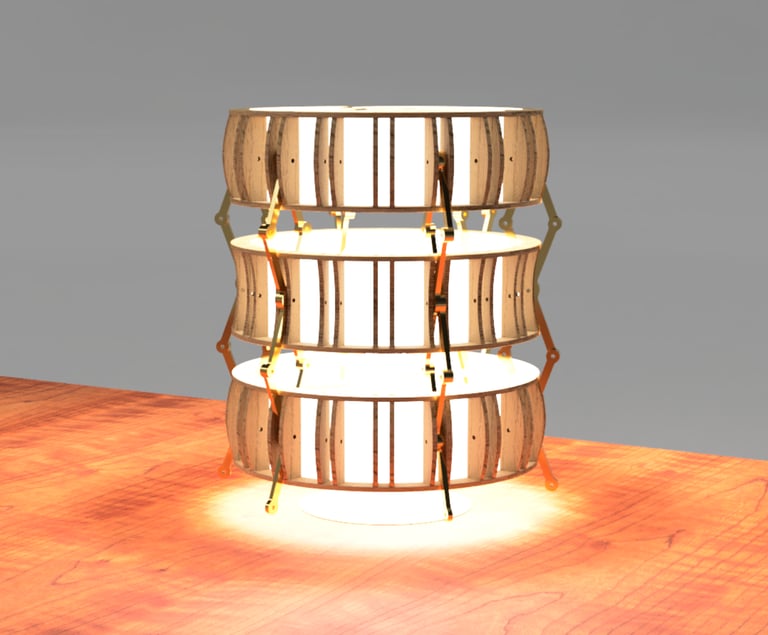
We anchored our design form language in Chinese lanterns and paired it with a scissor-lift (pantograph) mechanism to create adjustability with a clear purpose: a mechanical dimmer.
Prototype 1 - proving the mechanism
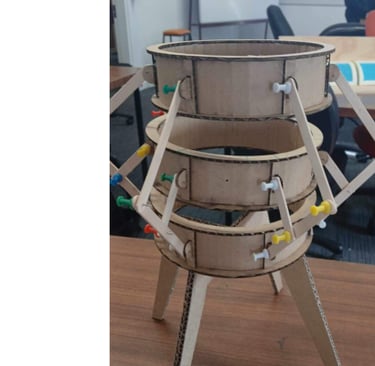
Our first-gen build was focused on validating the pantograph concept, but it revealed a key constraint: we were limited to three layers, and scaling the rings larger or taller made the mechanism bulky and difficult to control. This prototype established the core interaction, while flagging proportion and controllability as the next issues to solve.

Prototype 2 - usability + stability iteration
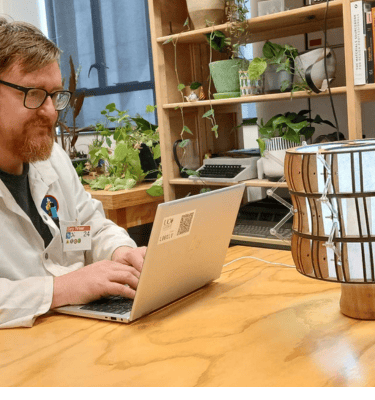
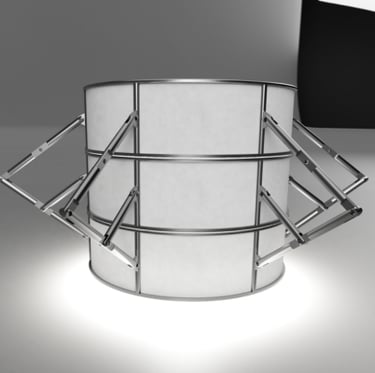
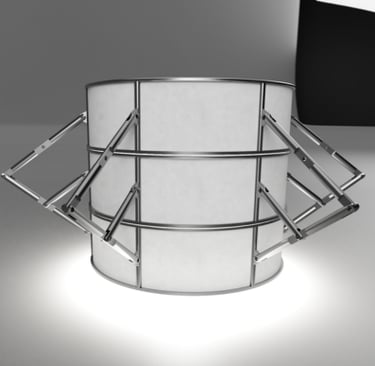
In the next prototype, we reworked the structure based on hands-on testing. To achieve continuous sizing across the design, we nested the design and laser-cut the majority of the assembly. We introduced a better stand, because the Initial stand was poor. We made the mechanism smaller and more integrated. We also changed the layers to improve proportions (less short/wide). We explored a turning adjustment idea, but testing showed it wasn’t feasible, so we shifted to relying on joint friction to hold the lamp in place. Initial user testing also highlighted two practical issues to resolve: the rings wouldn’t stay open, and there was no clear place to put your hands while opening.


Prototype 3 — resolved interaction + final build
We then split off into two weeks of solo development, exploring individual design directions. At the end of this period, we regrouped and combined the strongest elements from each redesign into a single final direction: the chosen overall form, a refined base, and the addition of a handle to make the interaction obvious and intentional.
We then committed to a workshop-feasible build. The base was turned from recycled rimu, with a central hole for the light and cable routing. The baffle rings remained laser cut (ply frame + rice paper), and the arms were also laser cut and assembled with bolts, washers and nuts, tightened so the mechanism lifts smoothly and holds position without dropping under gravity.
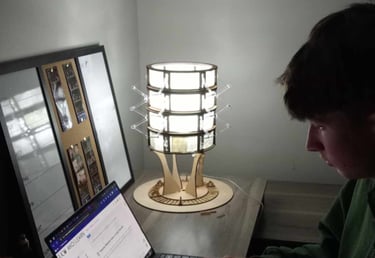

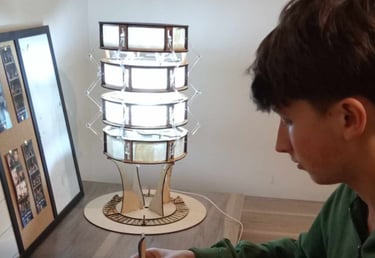


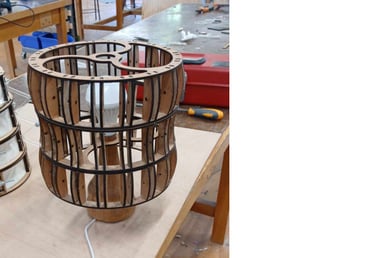


Insights into the final design.
02 - Final Design
Overview
Adjustable task lantern that transitions between ambient and task lighting through mechanical movement (no electronic dimmer).
Uses a pantograph (scissor) mechanism to lift layered baffles, changing brightness and light spread.
Handle-led interaction makes the “grab + lift” adjustment intuitive and controlled.
Stable turned timber base with integrated cable routing keeps the footprint compact and desk-friendly.
Built from workshop-feasible processes: laser-cut components + simple mechanical fasteners + turned base.